
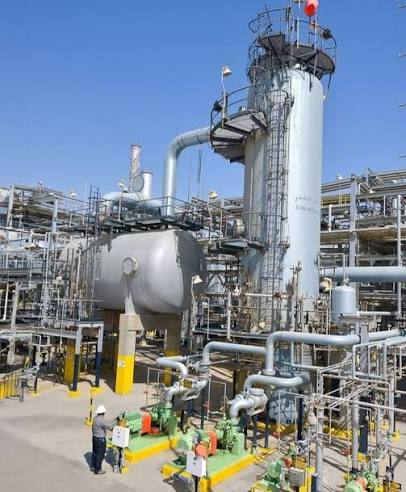
A fresh controversy is emerging over the reported volume of crude oil being produced from Uzere, an oil-producing community in Isoko South Local Government Area of Delta State, with community indigene Joshua Henry calling for an independent verification of production figures from the community's oil fields.
Henry says his concern is not simply about how much crude oil is physically present beneath Uzere, but about whether the figures being used for production, revenue calculations and regulatory reporting accurately reflect what is actually coming out of the wells.
For years, a figure of approximately 53,000 barrels per day has appeared in publicly accessible descriptions of Uzere's oil production. Some online references describe Uzere as having two oil fields and about 43 wells, with production of roughly 53,000 barrels per day.
But Henry is challenging the continued use of that figure as though it represents the current reality.
His argument is based on an observation from a recent well incident in the community, where crude was reportedly being evacuated using tanker trucks.
The Calculation Behind Henry's Question
Henry's calculation is straightforward.
If a tanker carries approximately 33,000 litres, and about 200 tanker loads were required to evacuate crude from a single well over a 24-hour period, the volume would be:
33,000 litres × 200 trucks = 6,600,000 litres per day.
Using the standard conversion of approximately 159 litres to one barrel of crude oil:
6,600,000 ÷ 159 = approximately 41,509 barrels per day.
That means, if the reported 200 truckloads from that single well are independently confirmed and represent actual crude evacuation over a full day, the implied volume would be about 41,500 barrels per day from that well alone.
Henry then makes a much bigger extrapolation.
If a similar rate were recorded across 43 wells:
41,509 × 43 = approximately 1,784,887 barrels per day.
That is roughly 1.78 million barrels per day.
However, Southern Report considers it important to make one distinction clear: this calculation does not establish that Uzere actually produces 1.78 million barrels per day. Production from one well cannot automatically be multiplied across every well because individual wells have different reservoir pressures, flow rates, operating conditions and production histories.
What the calculation does establish is that the claim is testable.
And that is exactly where Henry wants the federal government to focus.
'Let Them Measure It Properly'
Henry is calling on the Federal Government to conduct an independent technical assessment of production from Uzere's oil fields rather than relying solely on figures supplied through existing industry channels.
He specifically wants representatives of the host communities to participate in the inspection and measurement process.
His argument is that communities where petroleum is extracted should not be treated merely as observers while production figures that directly affect national revenue and host-community benefits are determined elsewhere.
Uzere forms part of OML 30, an onshore asset operated by Heritage Energy Operational Services Limited (HEOSL) on behalf of the joint venture involving NNPC Exploration and Production Limited and Shoreline Natural Resources Limited. NUPRC's records identify OML 30 as a joint-venture asset, while Heritage itself describes HEOSL as the operator.
Heritage's CEO, Ado Oseragbaje, remains the chief executive of both Heritage Oil and HEOSL.
The company has also publicly discussed plans to increase production from OML 30, including drilling and workover activities aimed at unlocking additional production.
Who Is Responsible for Checking the Numbers?
This is where the matter becomes bigger than Uzere.
At the federal level, the Nigerian Upstream Petroleum Regulatory Commission (NUPRC) is responsible for regulating Nigeria's upstream petroleum sector.
As of 2026, Mrs. Oritsemeyiwa Eyesan is the Commission Chief Executive, while Senator Magnus Abe serves as Chairman of the NUPRC Board. The new board resumed in April 2026 with a mandate to strengthen oversight and regulatory leadership.
The Senate's Committee on Petroleum Resources (Upstream) is chaired by Senator Eteng Jonah Williams of Cross River Central. The committee has responsibility for legislative oversight of the upstream petroleum sector and was involved in the recent screening of nominees to the NUPRC board.
The political executive responsible for petroleum policy includes President Bola Ahmed Tinubu, while Senator Heineken Lokpobiri serves as Minister of State for Petroleum Resources (Oil) and Rt. Hon. Ekperikpe Ekpo serves as Minister of State for Petroleum Resources (Gas).
These are therefore some of the key institutions and officials whose attention the Uzere production question ultimately concerns.
The Revenue Question
Why does the production figure matter so much?
Because barrels of crude are not merely numbers on a spreadsheet.
Production figures affect calculations surrounding government revenue, royalties, taxes, joint-venture economics, host-community interests and the broader value derived from petroleum assets.
If production is higher than reported, the question becomes whether Nigeria is collecting the revenue it should.
If production is lower than claimed, the opposite question arises.
And if the existing figure is simply outdated, then the solution should be straightforward: measure the wells again and publish the current data.
NUPRC itself has repeatedly placed emphasis on measurement, transparency, governance and data integrity in the upstream sector.
The commission reported that Nigeria's average crude oil production reached 1.56 million barrels per day in June 2026, with combined crude and condensate production averaging about 1.735 million barrels per day.
That national figure provides another reason why extraordinary claims about production from an individual community deserve careful technical verification.
Uzere Wants Evidence, Not Assumptions
Henry's position is ultimately a challenge to both government and the operator:
If the production figure is correct, demonstrate it. If it is wrong, correct it.
He is asking for an independent physical inspection of flow lines, wellheads, metering systems and evacuation records, with host-community representatives present.
He also rejects the idea that every reduction in crude output should automatically be attributed to pipeline vandalism or oil theft.
According to him, Uzere youths have lived with oil operations for decades and the community should not be collectively blamed for losses without evidence establishing who is responsible.
This argument comes amid renewed tensions over oil operations in Uzere. In July 2026, the Isoko Development Union Youth Wing issued a 72-hour ultimatum to Heritage Energy over a reported spill at Wellhead 14 in Uzere Cluster 9, demanding containment, remediation and a transparent Joint Investigation Visit.
The incident adds urgency to calls for greater transparency around oil production and environmental management in the community.
Joshua Henry's Challenge
Henry is therefore calling on President Tinubu, the Ministry of Petroleum Resources, NUPRC, the Senate's upstream petroleum committee and the operators of OML 30 to engage directly with the people of Uzere.
His message is simple:
Come to Uzere. Inspect the wells. Examine the meters. Check the flow lines. Examine the evacuation records. Measure the production. Publish the figures.
If the community's calculations are wrong, he says he is prepared to accept the evidence.
But if the figures being used by regulators and operators are inaccurate, then the people of Uzere deserve to know.
"I am calling on the Federal Government and the agencies responsible for petroleum exploration to invite me and representatives of the indigenous communities to participate in the inspection. Let the evidence speak for itself," Henry said in his position presented to Southern Report.
For a country trying to increase crude production and reach higher revenue targets, ensuring that every producing field is properly measured should not be a controversial demand.
And for an oil-producing community that has lived with petroleum exploration since the early years of Nigeria's oil industry, the demand for accurate figures is also a demand for accountability.
Southern Report will continue to follow the Uzere production, environmental and host-community revenue questions and will give Heritage Energy, NUPRC and other relevant authorities the opportunity to respond to the issues raised in this report.
Discussion (0)
Sign in to join the discussion.
Log InBe the first to comment on this story.